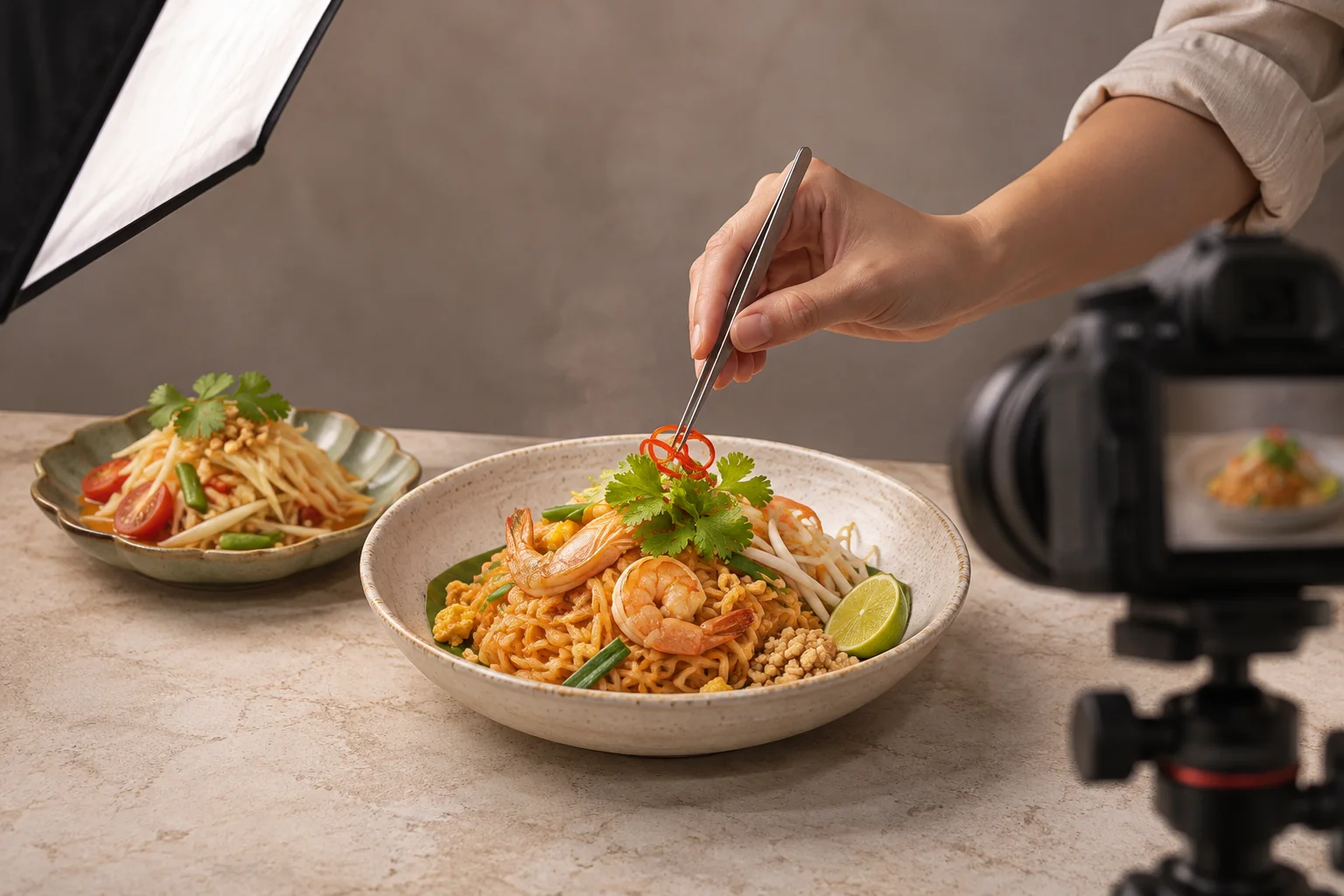
Food can change appearance while waiting to be photographed: ice melts, sauces move and garnishes lose their freshly arranged look. Planning food photography studio rental in Chiang Mai should start with how dishes reach the set and their shooting order. Coordinating the food team with the photographer reduces time spent waiting with an important dish already plated.
Separate menu photographs from brand imagery
A menu image needs to clearly show the item being sold. Promotional photographs may combine several dishes, hands or additional props. Identify the destination for each image, such as a printed menu, website or ordering platform, and check that channel's current dimensions and aspect ratios.
| Image | Show | Prepare |
|---|---|---|
| Individual menu item | The complete dish as sold | Actual serving size and tableware |
| Meal set | Main and accompanying dishes | An accurate list of included items |
| Promotional image | Atmosphere and the menu's key appeal | References, background and room for text |
Sequence by the food's behaviour
Ask the food team which dishes need photographing immediately, which can wait and which require a fresh plate for another angle. Set up the camera and lighting with an empty plate or substitute before bringing in the real dish, especially for iced drinks, melting desserts or distinctive surface textures.
An example sequence is to establish lighting, approve one reference dish, then call for the remaining food in the agreed order. Avoid finishing every dish at the start unless the team has planned for the wait.
Give food approval a clear owner
Someone familiar with the actual menu should check ingredients, portions and plating, while the photographer checks light and composition. A single food approver keeps adjustments clearer. Bring spare tableware and ingredients as the food team considers necessary so a replacement plate does not require rebuilding the setup.
- Label transport containers and image files with menu names.
- Separate ready dishes, used tableware and styling equipment.
- Check fingerprints, plate rims and unintended marks before shooting.
- Keep presentation and portions consistent with what customers receive.
Confirm food preparation arrangements
Explain whether food will arrive ready or require plating or preparation on site. Mention electrical equipment, holding space and used tableware. Do not assume a photo studio includes a kitchen, refrigerator or cooking equipment; confirm its facilities before planning transport.
Share KOI's actual venue photographs and photography equipment list with your photographer. For packaged products, refer to the general product preparation guide and separate packaging shots from ready-to-serve dishes.
Menu shoot questions
Should food be brought in or prepared at the studio?
That depends on the dishes and the facilities the venue confirms. Agree the method between the food team and venue before booking.
How many menu items fit in one session?
Consider angles, plating complexity and preparation repeats. Ask the photographer to estimate the actual brief rather than counting dishes alone.
Is a food stylist included?
Confirm separately. Venue rental, photography, styling and ingredients are distinct costs.
Send KOI your menu brief
Include the date, dishes, angles per dish, intended image uses, preparation method, crew size and references. Review current rental packages and the San Phi Suea location map to coordinate transport with the shoot.