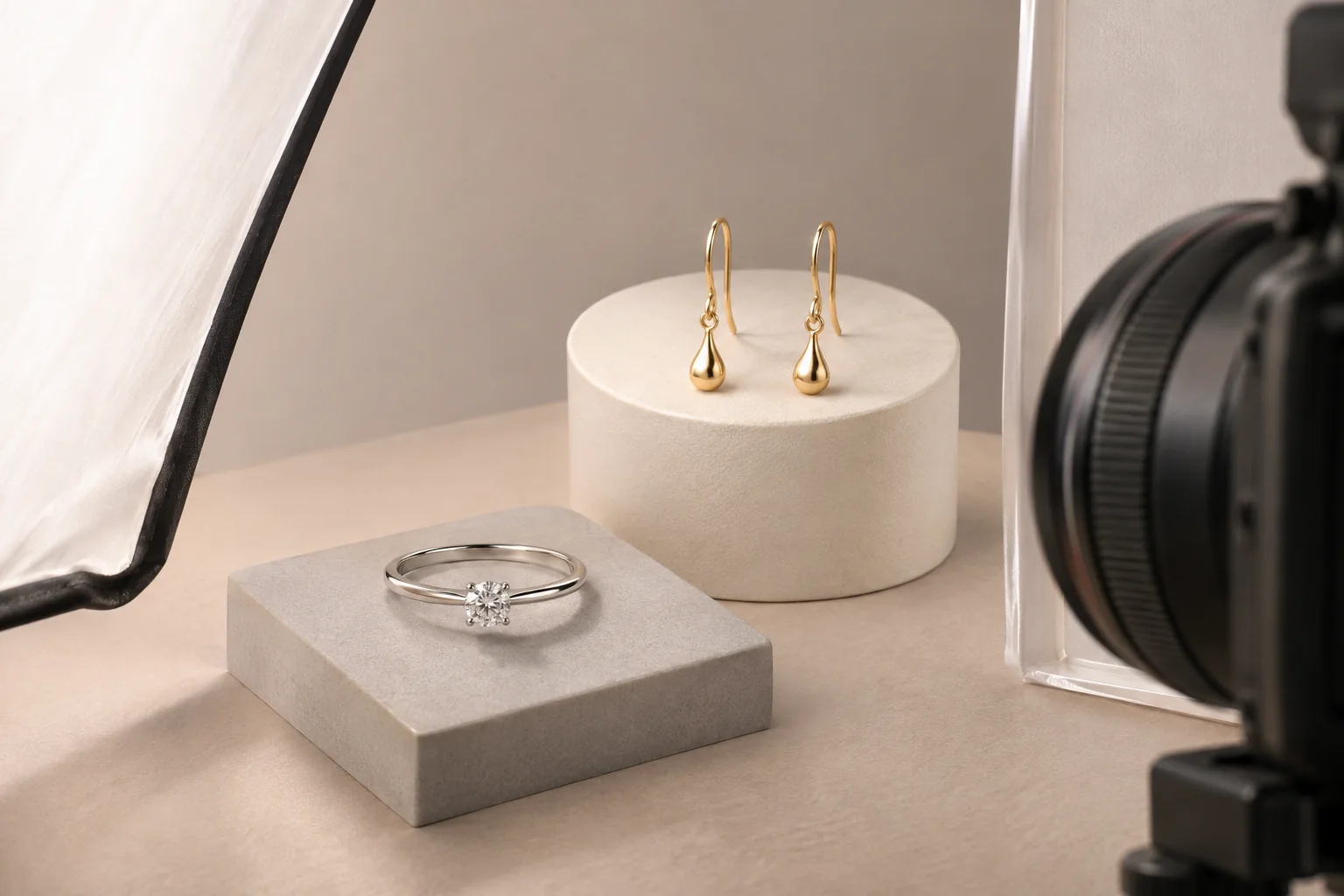
A small ring or necklace can take longer to arrange than a much larger product. Fingerprints, alignment and reflections become obvious in an enlarged image. For jewelry photography studio rental in Chiang Mai, explain what customers must see in each piece, then ask the photographer to estimate equipment and time from the actual brief.
Separate product information from atmosphere
Sales photographs should reveal shape, materials and important components. A mood image may deliberately emphasize only part of the piece. List both separately so decorative styling does not hide the details customers need.
| Image | Main detail | Confirm with the photographer |
|---|---|---|
| Main ring view | Face, setting and decorative elements | Required sharp areas and reflection control |
| Necklace or earrings | Line, symmetry and requested fastenings | Supports that do not obscure the piece |
| Close detail | Texture, setting or distinctive feature | Output size and necessary equipment |
| Worn photograph | Scale relative to the wearer | Model, wardrobe and additional time |
Prepare labelled pieces and reference photographs
Match product codes, colours, materials and quantities to their containers. Use the handling and cleaning method specified by the owner rather than assuming one product suits every material. Take references before handover so the crew can identify necklace orientation, matching earrings and all components.
Assign responsibility for checking each piece in and out. Record codes and counts at arrival and departure, and separate ready items, completed items and packaging. This helps avoid confusion among many small pieces.
Test a representative surface first
Start with a piece representing the main material, such as smooth metal or a detailed setting. Check for reflections of the camera, equipment or surroundings in important areas. Adjust the item and reflective surroundings while reviewing the image; simply increasing brightness is not the only consideration.
Specify which details must be sharp and the final output size, then let the photographer choose the method and tools. Review KOI's equipment inventory and confirm additions. Do not assume macro lenses, light tunnels or focusing rails are included.
Inspect both the final display size and enlarged details
- Metal and material colours should match the reference piece.
- Required details should be clear, without unintended dust or fingerprints.
- Positioning and image scale should remain consistent across the shop layout.
- File names should match product codes and all agreed views should be present.
Group pieces that can share a setup before changing materials or backgrounds. Use the general product preparation guide for inventory planning, then add the reflection and handover requirements specific to jewelry.
Jewelry shoot questions
Do smaller pieces take less time?
Not necessarily. Placement, reflections and the number of views matter. Send sample photographs for an estimate.
Is macro equipment needed for every shoot?
It depends on the piece, the required detail and the output size. Ask the photographer to assess and confirm the necessary tools.
Does rental include custody or insurance for the products?
Agree responsibility, return procedures and related conditions separately with everyone involved. Do not assume these are part of space rental.
Send KOI the jewelry brief
Include sample images, item count, materials, views and whether a model will take part, plus table, backdrop and equipment needs. Review actual space photographs and rental packages, then use the KOI Studio Chiang Mai contact details to check availability.